
TOLL FREE 877 278 2142 USA
TOLL FREE 844 776 3727 USA & CAN
TOLL FREE 877 278 2142 USA
TOLL FREE 844 776 3727 USA & CAN
Mexican food has some of the most well-known and loved dishes in the world. Mexican cuisine varies by region due to local climate and geography amongst other things.
This time we will take a culinary tour in the Banderas Bay area.
Vallarta is actually an important culinary destination in itself. A mix of international chefs, discerning gourmands that have made the city their hometown, a long-running gourmet festival, the local Mexican food traditions, that are centuries old plus quality ingredients from sea and land combine into great food, great prices and an ever-expanding list of options.
In here seafood is a favorite, plus the local dishes are very interesting for the newcomers too, these include dishes that are part of Jalisco's traditions (the state in which Vallarta is located), especially from Guadalajara, the state capital.
1.Pescado or Camarón embarazado
One of the local dishes that best represents what is typical in the town is "fish or shrimp embarazado", that is, pregnant fish/shrimp... sounds weird? It's mostly the name that is, it's actually a linguistic deformation of "pescado en vara asado", that is fish roasted on a stick.
This delicious local food is prepared by grilling fish or shrimp marinated in lime over coals, then served with Huichol salsa. The fish itself can be school shark (cazón) or marlin, another variant is to use shrimp instead of fish.
2.Birria
The main ingredients of this dish include goat or lamb meat, boiled in a spicy sauce that includes cumin, oregano, and ginger. It's served with lime (they call it lemon here), onions and the inseparable tortillas
3.Pozole
The most famous dish and the favorite of almost all Mexican is "Pozole" that has different incarnations around Mexico, in Jalisco and Vallarta it's a tasty broth that includes as main ingredients pork or chicken meat, seasoned with chili and includes a special popped corn. Once served you eat it with lettuce, radishes, and tostadas (sun-dried tortillas) y can be red or white, depending on the ingredients used for the soup.
4.Tamales
A Mexican favorite, that you'll also enjoy in Puerto Vallarta is the "tamal" (plural: tamales), these are actually an American dish that you'll find in local variants from Mexico all the way to Patagonia. The local version is prepared with white corn dough that is filled in the middle with either salty or sweet options, the most popular are green tomatoes with meat or red tomatoes with meat, all include chili pepper in greater o lesser amount, ask before eating, some have a sweet pineapple filling, kids like these a lot and they DO NOT include chili. The dough is then wrapped in corn leaves and steamed, yummy, give them a try!

5.Tortas ahogadas
We can't forget the famous "Tortas Ahogadas" (can be translated as "drowned sandwiches"), a very typical local dish. In Guadalajara, there's a saying that "you've not been to Guadalajara unless you've eaten tortas ahogadas", so you're expected and "forced" to try them. These sandwiches are made with a special local white bread called "birote" (the story behind the name is that a Frenchman whose last name was Birot, in the XIX century tried to make baguettes in Guadalajara and ended up inventing the birote) that is then stuffed with pork meat in pieces (some variations include shrimp and other fillings) and then covered with a generous amount of spicy chili and tomato sauce (that's when they are "drowned"...), many places offer a variety of sauces from "pica poquito" to stronger options.

Summertime is just a few weeks away, which means family vacations are likely on the brain.
The idea of planning a vacation with kids in tow can be intimidating. Sure, the actual vacation is supposed to be relaxing (or as relaxing as a vacation with kids can be!), but getting to that point can be a maze of hotel recommendations, travel blogs, flight seat selections and more.
So we have some vacation planning tips so you can get that trip booked with ease. From flight hacks to safety recommendations, here’s what they shared.
Plus we gather the best hotel deals in beach luxury resorts with amazing kids clubs
Google is a helpful resource when planning a vacation, but if you’re at the beginning of your planning process, try to resist the temptation to hop on with your searches.
If you start with Google, it’s the paradox of choice.There’s so much out there and you just don’t even know what you’re looking for.
Instead have a family meeting to learn how far everyone wants to go, what activities they’d like to do, their thoughts about hanging out on beaches vs. exploring local villages, and so on. Then, let Google help you arrange tours and plan other activities.
Also, knowing when you want to go can sometimes help you put together a list.
Certain places and activities will be more accessible at different times of the year, so once you know exactly when and how long you want the trip to be, the choices can be narrowed down a bit.
Of course, school vacation means peak travel times. Planning ahead can help you and your family avoid higher prices, sold-out tours and the headache that comes after learning there aren’t enough seats together on a flight.
If you have young children who are not in school and have flexibility with dates, it is best to travel at non-peak times. For example, the first week of January after the New Year offers lower pricing than staying over the holiday week,.
Having plenty of advance notice of a trip will also allow you to send important supplies (like diapers, baby products, sunscreen, etc.) to your vacation spot before you leave. Many hotels will happily arrange for this. Plus, sending these things leaves room in your luggage for other belongings.

If you give the hotel information and tell them about yourselves and about your family, everything can be set up for you.
As an example, ask for turndown service at a different time if you know your toddler will be sleeping, bring a notecard with you about the restrictions that are in the local language and give it to them so they can tailor to your needs.
If your kids have sensory difficulties call hotels ahead of time to ask whether the housekeeping team incorporates any strong smells as part of the room ambience.
Resist the temptation to plan several tours or activities a day, leave some time in the day to rest, you should always factor in travel time and wait times when scheduling excursions and other fun things.
Of course, the trip planning doesn’t end after the hotel and mode of transportation are booked, plan on bringing “a handful of small gifts in wrapping paper” to keep kids occupied.
Another idea that’s a bit out of the ordinary? Bring blue painter’s tape to distract the kids, blue painter’s tape works wonders on planes, it’s cheap, easy, and it doesn’t ruin any surfaces!”
If you’re looking for something that keeps kids occupied and requires no extra belongings, make the plane ride part of the adventure and talk to the kids about the trip while traveling. It’ll keep them busy and get them excited about the vacation.
And if you’re traveling internationally, don’t forget to check everyone’s passports, not just your own. Remember that children’s passports expire every five years (vs. 10 years for adults), so be sure those are up to date, the expiration date on passports must be valid at least six months beyond your date of travel [for some countries].
Planning trips can be stressful, but the research pays off.
It might be a little extra work on the ground before you go, but at the same time once you’re there it’ll allow you to fully enjoy and appreciate the vacation instead of having to be concerned about it when you’re there.
And if you are feeling overwhelmed or spotting too many restrictions on your family’s needs at a certain destination, simply go somewhere else.
Via: Huffpost

From Caribbean beaches to Pacific cruise ports, destinations in Mexico offer optimal inexpensive getaways. Cabo San Lucas, Puerto Vallarta, Puerto Peñasco (Rocky Point) and The Riviera Maya are just three vacation hotspots that won't wreck your wallet. Don't let pricey airline tickets ruin your vacation budget. With a few simple tips, save money you can spend instead on tours, souvenirs and enjoying Mexican culture.
Use the calendar
Use Southwest Airlines Low Fare Calendar online to view the cheapest times to fly to Cancun, Puerto Vallarta, Mexico City or Los Cabos. Enter your origination and destination cities and click on the month that you wish to travel. A calendar pops up showing the best deals for each day of the month. For example, airfare the day after Christmas and the weekend before Christmas is the most expensive time to travel during the month of December on a flight from Phoenix to Cancun. A flight costs less than half as much during the first 12 days of the month or after the first week of January.
Avoid Holiday Travel Times
Visiting Mexico during national holidays can be a festive and exciting experience, but you'll also pay a premium for airfare. Travel during times when school is in session and government and businesses offices are open to find the lowest rates. Mexican citizens tend to travel during the national holidays when many businesses close for one or more days. Airfare increases to Mexico for the Christmas holiday season beginning with December 12, the Day of the Virgin of Guadalupe. Although the main focus of the festival is Villa de Guadalupe Hidalgo north of Mexico City, the national holiday gives citizens time to travel in all parts of the country. The winter holiday season ends with the New Year's holiday. The Easter season is another busy travel season in Mexico where Maundy Thursday and Good Friday just before the Easter weekend are national holidays. Other national holidays include:
Constitution Day, the first Monday in February
Benito Juarez's Birthday, the third Monday in March
Labour Day, May 1
Independence Day, September 16
Revolution Day, the third Monday of November
Price flights online
If you know when you want to go on your Mexican holiday, check out onsite price matching sites like JustFly or Google Flights. Although you might have to move quickly to snag the very best deal, take time to check out the details before you commit. Some prices you'll find online don't include taxes and additional fees, which can tack on more than $100 on a flight from Phoenix to Cancun, for example. Lower priced fares might add one or more stops, extending your flight time. For example, a 4.5-hour flight from Phoenix can turn into 15 hours of flying and airport layovers when you fly via Dallas to save a few dollars. Keep legroom in mind, too. Google Flights includes how much legroom you'll have which, if you're tall, can be worth paying more for to be comfortable for hours in the air.
With SQN Getaways, find the best accommodation packages and have an amazing time in paradise.
Source: (Usa today)
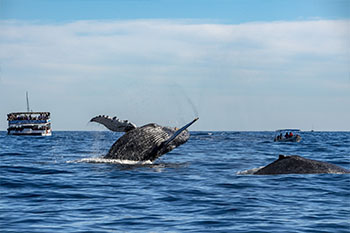
Every year Gray, blue and humpback Whales migrate away from the cold, to the warmer waters near Mexico to breed and bear their calves… They begin arriving in November and from December to the end of March each year, there’s an opportunity to catch glimpses of the amazing Whales …
Whale is the common name for marine mammals which belong to the Cetacean order, which also includes Dolphins and porpoises. Whales collectively inhabit all the world’s oceans and number in the millions, with annual population growth rate estimates for various species ranging from 3-13%.
This bay is nestled between the states of Jalisco and Nayarit, so Puerto Vallarta is a good point of departure. As these mighty whales reach 14 meters in length, it is possible to see them from the beach while they’re jumping in the sea, but there’s nothing compared to getting a closer view. A tour is advisable since the agencies are constantly monitoring the whale sighting spots and know exactly where to go. You will see dolphins along the way, so get on board and enjoy a photo safari.
From December to March, it is possible to see 11 different species of these enormous whales. The Mazatlan-Teacapan zone carries out activities for humpback whales. During boat tours, it’s possible to observe dolphins, sea lions, and even killer whales. Mazatlan also has a stunning beach, so take a few days to soak up the sun and visit the “Old Mazatlan,” the Malecon and Isla de la Piedra.
Looking for the right conditions for mating, the gray whales swim along Los Cabos in Baja California from January to April. There are different options of transportation, from a standard boat to a luxury trimaran. For a better view, a boat with a glass bottom will help you get a fuller view of these animals. Relax during the ride by watching the stunning views of the Pacific Ocean, and photograph the sea lions and exotic birds along the way.

To help you prepare for your whale watching excursion, we have some tips that will improve your experience.
You need to be in the selected spot in Mexico between December and March, which is when the whales can be found in Mexican waters.
Eat a good, wholesome, breakfast; porridge or cereals and fruits are ideal. Don’t go whale watching on an empty stomach; also, you are less likely to suffer from motion sickness if you have eaten than not. Avoid too much greasy food and avoid alcohol before and during your excursion.
If you are experienced with binoculars, bring them along. Most people will not find them much use: it’s an art using binoculars on a moving boat and the field of vision is quite restricted.
A good camera with a zoom or telephoto lens is ideal. If your camera needs batteries, bring additional ones.
Bring rubber-soled shoes that will support your feet and your ankles as the boat moves and the waves hit up against the side of the vessel causing shudders or sudden movements. Flip-flops and heels are not appropriate on a whale cruise boat.
If you have never been on a long boat trip before, you might like to take some motion sickness medicine with you. You could purchase this at home or from any pharmacy in Mexico. You will need to take the medications before you board the vessel; it’s no use taking it once you are on the water.
Be sure you pack a high-factor sunblock and a hat as there is little protection from the sun once you are out on the open waters of the Pacific (besides the boat canopy which may only provide partial cover). Over 50% of the suns rays bounce off the ocean’s surface and hit you – so you can burn even in shade. You can also sunburn under overcast skies as the sun’s UV rays can penetrate cloud. If you are traveling with children, be sure they are well protected from the sun with sunblock a hat.
Most Whale Cruise boats have two decks; an upper deck, which offers better distance visibility and a lower deck, which is closer to the water (and thus the whales, when they appear) but with restricted visibility at distances. It’s impossible to predict when or how the Whales will appear. There are very strict maritime guidelines about how a boat should approach and be maneuver around whales and the skipper may not be able to go in the direction that you think will offer you the best view.
A lot of time on a whale watching excursion can be taken up with waiting for the whales to appear. Children, especially young children, can get bored quickly with nothing to see or do. Bring crayons, coloring pads, books, and small games to keep your children entertained during the day. Also, pack a picnic lunch and bring plenty of bottled water.