
TOLL FREE 877 278 2142 USA
TOLL FREE 844 776 3727 USA & CAN
TOLL FREE 877 278 2142 USA
TOLL FREE 844 776 3727 USA & CAN
If you’ve never snorkeled before, you may have some trepidation about giving it a try. But no need to worry. With just a few simple tips, you’ll soon be gliding among coral, turtles, tangs, angelfish, damsels, crustaceans, and maybe even octopuses and rays.
Since you may already be a bit uncomfortable in the water, it’s important that you feel as comfortable as possible with your equipment. Masks come in different shapes and sizes, so find one that fits properly so it won’t leak. Place it over your face – simply hold it, without putting the strap around your head – and inhale through your nose. If it doesn’t leak air, it won’t leak water.
If you choose to wear flippers (they are optional), try them on to make sure they are not too tight that your feet hurt, or too loose that you’ll lose them in the water.
Snorkels are fairly generic; if you’re using rental equipment, make sure it’s dry with no water inside. If it makes you squeamish thinking about putting something in your mouth that has been in hundreds of other mouths, you might prefer to buy your own. A simple mask and snorkel can be purchased for about $20.
You definitely shouldn’t be in the open sea the very first time you try snorkeling. Practice first in a pool or shallow water. Your mind tells you that you shouldn’t be breathing with your face in the water and you have to get used to this. Get comfortable with the mask and snorkel. Put your face in the water, breathe a few times, and take it out. When you’re comfortable with this, try swimming while doing it. Some water will inevitably get into the snorkel while you’re swimming, so learn how to purge the snorkel by blowing hard to get the water out.

You should do this both physically and mentally. Don’t go snorkeling on a full or empty stomach. Also, avoid alcohol before snorkeling; it will not enhance your experience and may make it more difficult. Your body can react differently to alcohol when in the water. Go with an open mind and a sense of adventure and anticipation too. If you’ve done your preparation and take it slowly, very little can go wrong. Focus on the new world that awaits you.
Choose a calm spot with minimal waves. Relax. Breathe slowly. Float, if you feel uncomfortable in deep water, use a floatation device. And always go with someone else, preferably an experienced snorkeler. It makes the experience more enjoyable, but most of all, it’s much safer. Relax, float, and enjoy the enchanting world beneath the waves!
Source: Beach
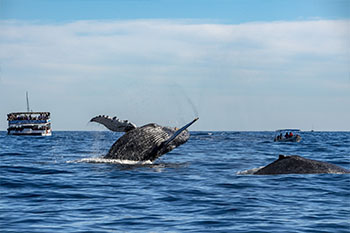
Every year Gray, blue and humpback Whales migrate away from the cold, to the warmer waters near Mexico to breed and bear their calves… They begin arriving in November and from December to the end of March each year, there’s an opportunity to catch glimpses of the amazing Whales …
Whale is the common name for marine mammals which belong to the Cetacean order, which also includes Dolphins and porpoises. Whales collectively inhabit all the world’s oceans and number in the millions, with annual population growth rate estimates for various species ranging from 3-13%.
This bay is nestled between the states of Jalisco and Nayarit, so Puerto Vallarta is a good point of departure. As these mighty whales reach 14 meters in length, it is possible to see them from the beach while they’re jumping in the sea, but there’s nothing compared to getting a closer view. A tour is advisable since the agencies are constantly monitoring the whale sighting spots and know exactly where to go. You will see dolphins along the way, so get on board and enjoy a photo safari.
From December to March, it is possible to see 11 different species of these enormous whales. The Mazatlan-Teacapan zone carries out activities for humpback whales. During boat tours, it’s possible to observe dolphins, sea lions, and even killer whales. Mazatlan also has a stunning beach, so take a few days to soak up the sun and visit the “Old Mazatlan,” the Malecon and Isla de la Piedra.
Looking for the right conditions for mating, the gray whales swim along Los Cabos in Baja California from January to April. There are different options of transportation, from a standard boat to a luxury trimaran. For a better view, a boat with a glass bottom will help you get a fuller view of these animals. Relax during the ride by watching the stunning views of the Pacific Ocean, and photograph the sea lions and exotic birds along the way.

To help you prepare for your whale watching excursion, we have some tips that will improve your experience.
You need to be in the selected spot in Mexico between December and March, which is when the whales can be found in Mexican waters.
Eat a good, wholesome, breakfast; porridge or cereals and fruits are ideal. Don’t go whale watching on an empty stomach; also, you are less likely to suffer from motion sickness if you have eaten than not. Avoid too much greasy food and avoid alcohol before and during your excursion.
If you are experienced with binoculars, bring them along. Most people will not find them much use: it’s an art using binoculars on a moving boat and the field of vision is quite restricted.
A good camera with a zoom or telephoto lens is ideal. If your camera needs batteries, bring additional ones.
Bring rubber-soled shoes that will support your feet and your ankles as the boat moves and the waves hit up against the side of the vessel causing shudders or sudden movements. Flip-flops and heels are not appropriate on a whale cruise boat.
If you have never been on a long boat trip before, you might like to take some motion sickness medicine with you. You could purchase this at home or from any pharmacy in Mexico. You will need to take the medications before you board the vessel; it’s no use taking it once you are on the water.
Be sure you pack a high-factor sunblock and a hat as there is little protection from the sun once you are out on the open waters of the Pacific (besides the boat canopy which may only provide partial cover). Over 50% of the suns rays bounce off the ocean’s surface and hit you – so you can burn even in shade. You can also sunburn under overcast skies as the sun’s UV rays can penetrate cloud. If you are traveling with children, be sure they are well protected from the sun with sunblock a hat.
Most Whale Cruise boats have two decks; an upper deck, which offers better distance visibility and a lower deck, which is closer to the water (and thus the whales, when they appear) but with restricted visibility at distances. It’s impossible to predict when or how the Whales will appear. There are very strict maritime guidelines about how a boat should approach and be maneuver around whales and the skipper may not be able to go in the direction that you think will offer you the best view.
A lot of time on a whale watching excursion can be taken up with waiting for the whales to appear. Children, especially young children, can get bored quickly with nothing to see or do. Bring crayons, coloring pads, books, and small games to keep your children entertained during the day. Also, pack a picnic lunch and bring plenty of bottled water.
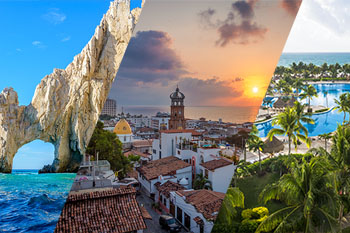
From Caribbean beaches to Pacific cruise ports, destinations in Mexico offer optimal inexpensive getaways. Cabo San Lucas, Puerto Vallarta, Puerto Peñasco (Rocky Point) and The Riviera Maya are just three vacation hotspots that won't wreck your wallet. Don't let pricey airline tickets ruin your vacation budget. With a few simple tips, save money you can spend instead on tours, souvenirs and enjoying Mexican culture.
Use the calendar
Use Southwest Airlines Low Fare Calendar online to view the cheapest times to fly to Cancun, Puerto Vallarta, Mexico City or Los Cabos. Enter your origination and destination cities and click on the month that you wish to travel. A calendar pops up showing the best deals for each day of the month. For example, airfare the day after Christmas and the weekend before Christmas is the most expensive time to travel during the month of December on a flight from Phoenix to Cancun. A flight costs less than half as much during the first 12 days of the month or after the first week of January.
Avoid Holiday Travel Times
Visiting Mexico during national holidays can be a festive and exciting experience, but you'll also pay a premium for airfare. Travel during times when school is in session and government and businesses offices are open to find the lowest rates. Mexican citizens tend to travel during the national holidays when many businesses close for one or more days. Airfare increases to Mexico for the Christmas holiday season beginning with December 12, the Day of the Virgin of Guadalupe. Although the main focus of the festival is Villa de Guadalupe Hidalgo north of Mexico City, the national holiday gives citizens time to travel in all parts of the country. The winter holiday season ends with the New Year's holiday. The Easter season is another busy travel season in Mexico where Maundy Thursday and Good Friday just before the Easter weekend are national holidays. Other national holidays include:
Constitution Day, the first Monday in February
Benito Juarez's Birthday, the third Monday in March
Labour Day, May 1
Independence Day, September 16
Revolution Day, the third Monday of November
Price flights online
If you know when you want to go on your Mexican holiday, check out onsite price matching sites like JustFly or Google Flights. Although you might have to move quickly to snag the very best deal, take time to check out the details before you commit. Some prices you'll find online don't include taxes and additional fees, which can tack on more than $100 on a flight from Phoenix to Cancun, for example. Lower priced fares might add one or more stops, extending your flight time. For example, a 4.5-hour flight from Phoenix can turn into 15 hours of flying and airport layovers when you fly via Dallas to save a few dollars. Keep legroom in mind, too. Google Flights includes how much legroom you'll have which, if you're tall, can be worth paying more for to be comfortable for hours in the air.
With SQN Getaways, find the best accommodation packages and have an amazing time in paradise.
Source: (Usa today)
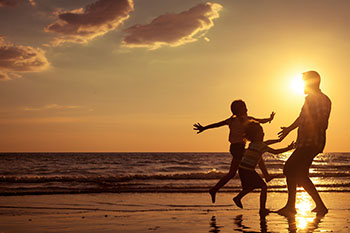
There are plenty of things one can gain from exploring different places such as new friends, new experiences and new stories. When you start exploring new places, you get a better understanding of the people living there including their culture, history, and background.
Studies show that traveling can improve your overall health and enhance your creativity. Therefore, you need to take time out from your daily tasks, office responsibilities, hectic schedule and everyday pressures at least once a year. Plan a tour to a new city with an open schedule and let life present you with the numerous opportunities that are waiting for you.
If you need more convincing, here is a list of all the benefits of traveling.
1. Improves Social and Communication Skills
One of the main benefits of traveling, especially to areas where your native language is not widely used, is that you learn how to communicate with all manner of different people. It could be communicating to find the way to your next destination or asking for the nearest restaurant
2. Ensures peace of mind
We all have stress and tension in our lives. Traveling forces us to temporarily disconnect from our normal routine and it helps us appreciate the people and things you have around. As per a famous saying “we never know what we have until we lose it.”
3. Helps you get original and creative thaughts
It is believed that if someone gets out of their comfort zone, the mind gets more creative. To develop new neural connections that trigger original and creative thoughts, you must explore new places and break out of your daily lifestyles.
4. Broadens your horizons
Travelling helps you connect with different people from different cultures, and this is fatal to prejudice, bigotry, and narrow-mindedness. Meeting people from different cultures and societies will help you see issues and daily life from many different angles.
5. Enhance your tolerance for uncertainty
While traveling, you will find yourself stuck in situations where things don’t always go as planned. Such situations will help you learn to cope with the uncertainties in life.

6. Boost up your confidence
Being in a place where you do not know anyone will assist you to gain confidence and presence of mind. You will develop the ability to cope with obstacles, which will make you a confident person and help you grow as a person.
7. Gets you real-life education
Meeting different people from vast cultures and societies provides an education that is impossible to get in a traditional school, college or a university. There is no substitute for the real thing.
8. Create memories for a life-time
If you travel with friends and family members, traveling helps you build stronger bonds and make memories. You can also save memories of a lifetime by creating photo albums or sharing photos in social media.
9. Helps you have fun
No matter how young or old you are, no matter your profession, there is always a time when the child in you wants to have some fun. When you travel, you do not care what you do at all and you can just break free from the norm.
10. Aids you get to know yourself
While traveling, you might find yourself stuck in situations you would not ordinarily experience in your daily life. Such a situation can help you understand yourself and how you react to such circumstances and prepare you for future similar situations.
Although traveling offers many benefits, it also has some disadvantages if not planned carefully. If you are a patient and taking medication for a disease, do not forget to carry your medication. Keeping jet lag pills handy saves you from unnecessary discomfort.
Those susceptible to allergies should carry allergy medication. Plan your tour in advance, prepare a checklist to keep yourself healthy while traveling and pack important items before you travel.
Travelling is good for the health so decide a place now and pack your bags. Remember, you only live once, so start traveling to different places and get some life-altering experiences.
Source: Benefits of traveling