
TOLL FREE 877 278 2142 USA
TOLL FREE 844 776 3727 USA & CAN
TOLL FREE 877 278 2142 USA
TOLL FREE 844 776 3727 USA & CAN
While it seems from Instagram that literally everyone you know is on a vacation or preparing for one, the statistics don't bear that out, especially for Americans.
Do any of these sound familiar?
"My team will flounder without me there."
"There will be too much work to make up for when I get back."
"I try to take vacations, but by the time I realize I need time off, everything's booked."
These are just some of the reasons my American friends give for not using their vacation days—if they're lucky enough to get paid days off.
Unlike every other developed nation in the world, the U.S. has no mandated number of days off for employees. About one-fourth of American workers get no paid vacation at all. Those whose employers offer it receive an average of about 10 days a year. And 54% of American workers didn't even use the days off they earned, according to Project Time Off.
Meanwhile, workers in the United Kingdom get 28 days off, most of western Europe gets 25, laborers down under in Australia and New Zealand enjoy 20—and none of those totals include public holidays, which add on another 10 to 13 days per year in most countries.
While China only gets 5 mandated vacation days for the youngest workers (more as you advance), that doesn't include semi-annual chunks of time off called "Golden Weeks."
Why do so many Americans eschew vacations? It could be that because vacation time isn't mandated, but up to employers. Perhaps it's seen as some kind of bonus, rather than earned time off.
Or maybe it's because the United States doesn't have a strong vacation culture: Many American kids grew up with parents who didn't receive it or were also too busy to take time off. When those children start working themselves, they don't know what to do with their time off because they never learned it from their parents. It's hard to value something that's never been experienced.
The 1992 Framingham Heart Study, which still stands as the gold standard for long-term health studies, tracked workers over 20 years. sIt found that "men who don't take vacations were 30% more likely to have heart attack and for women it went up to 50%," according to Brigid Schulte, author of "Overwhelmed: Work, Love & Play When No One has the Time" and the director of the Better Life Lab at the New America Foundation.
Those numbers hold true even after researchers took into account other health factors like diabetes, cigarette smoking, income levels and obesity. The conclusions from the study have been backed up by other similar research studies.
"It shows how the body reacts to a lifestyle of stress. This is real evidence that vacations are important to your physical health," Elaine Eaker, a coauthor of the study, told the New York Times.

Travel reduces stress
Researchers have also found that vacation is also valuable for mental health and well-being.
"Vacation is essential to reset and remind yourself that career is not the be-all and end-all. There are other facets to a healthy existence [outside work]," said Sherry Amatenstein, a New York City-based therapist and editor of the anthology "How Does That Make You Feel? True Confessions from Both Sides of the Therapy Couch."
That mental break doesn't just feel good. It also benefits businesses -- which is probably why even though Western European workers have more time off than the US does, generous vacation policies haven't been found to affect productivity.
Schulte says that all the research points in the same direction. Those who don't take time off are "sicker, less productive, stressed, and more anxious and depressed—that affects your work as well."
She says it behooves managers, CEOs and leaders to create systems that prioritize a culture of vacation. Requiring workers to take time off or including vacation planning as a part of performance reviews are two ways to make sure time off is used—all of which will benefit the bottom line.
For the individual, it might sound strange, but vacations take practice, said Schulte. "The more we take that time, the more we want it," she said.
So, how do you get in the vacation habit? Like any other goal, it requires planning.
"The key reason people give for not taking vacations is that they don't feel they can leave work," says Schulte, but you can if you're organized.
Start by "writing in your calendar beforehand when to schedule time for a trip," said Amatenstein. Once the vacation is in your schedule—even if it's six or eight months from now—you can organize around it. And then check our amazing packages to travel to the beach!
Look at your workflow. In your own schedule, "clarify your priorities, delegate, and talk openly with your colleagues about your time off," says Schulte, so it's not an unexpected surprise when you're out of town. Schulte says that planning will force you to prioritize your goals over time and can be a net benefit, helping you work smarter and more efficiently.
Start viewing vacation time as a non-negotiable—like the dentist or yearly checkup, it's a vital part of your health care, so start treating it as such.
Source: Why vacations matter for your health

Waves gently crashing along the shore. Sunlight streaming from a cloudless sky. Miles of seemingly-endless sand joining the horizon. Sounds pretty peaceful, doesn't it? And for many of us who spend most weekday hours indoors, it doesn't take much persuasion to peel off the layers and catch some sun.
But if you do need more reasons to hit the beach, find out how the surf, sun, and sand can boost your physical and mental health.
Look no further than the experts. In a study published in the Journal of Environmental Psychology, author J. Aaron Hipp, Ph.D., environmental health expert and assistant professor at the Brown School, pointed to the restorative environment of the beach.
"Studies have shown that natural environments like beaches and waterfront parks offer more restorative benefits to people than gyms, entertainment venues and the built urban environment," said Hipp.
His study goes further to suggest that we require specific conditions in that beachside environment to achieve the fully-desired restorative effect.
"Mild temperature days and low tides offer the most restorative environments when visiting the beach," he said.
"Beachgoers visiting on a day nearly 3 degrees (F) warmer than average were 30 percent less likely to perceive the beach or coastal park as restorative, compared with those visiting on average or cooler than average days."
We all know the risks of too much sun exposure. But there are benefits to getting some rays, too.
When our skin is directly exposed to the sun, our bodies make vitamin D, a vital tool that helps with calcium absorption and building strong bones. Some of it comes from diet, but a good portion also comes from the sun. And according to the Mayo Clinic, as little as 10 minutes of sun exposure can provide us with our daily dose. According to the vitamin D council, "your body can produce 10,000 to 25,000 IU of vitamin D in just a little under the time it takes for your skin to turn pink."
In one study, sun exposure was shown to offer other benefits in addition to vitamin D production — including an increase in endorphins and possible prevention of autoimmune diseases.
But despite these benefits, limit your exposure to excessive sunlight to avoid skin cancer risks. When you do head out into the sun for more than a few minutes, remember to wear protective clothing and apply sunscreen with an SPF 15 or higher.

Did you know that the soles of your feet have more sweat glands and nerve-endings per square centimeter than any other part of your body? And that walking barefoot stimulates them much more than walking in shoes?
Not only are you stimulating nerve endings when you walk on the sand, but you're also strengthening the muscles in your feet, which don't get used nearly as much when you're wearing shoes. And according to Martin Zucker, author of Earthing: The Most Important Health Discovery Ever?, you may be better connected to the earth when you ditch your shoes, reaping vital mood-boosting benefits. "Earthing," argues Zucker, reconnects our bodies to the ever-present energy of the earth, which modern lifestyles have increasingly diminished.
And in a study focused on running and walking on the sand, researchers found that walking on sand requires 1.6 to 2.5 times the energy than it takes on a hard surface.
"Our muscles perform more mechanical work when running or walking on sand than on a hard surface," said study co-author Dr. Thierry M. Lejeune, M.D.
If treading on the unwieldy sand for too long sounds tiring, try alternating your walk or run on the more compact sand closer to the water, where the surface will be less challenging.
Sea water contains high levels of various minerals — including magnesium, potassium and iodine — which may help fight infection, offer therapeutic effects, and potentially help the body heal and detoxify.
Swimming is linked to decreased stress and increased sense of well-being; studies have shown swimming and water-based exercise help to decrease anxiety and depression.
Aside from its therapeutics effects, swimming provides excellent physical exercise, employing most of our major muscle groups, especially as the water provides gentle resistance.
According to the Centers for Disease Control and Prevention (CDC), swimming ranks as the fourth most popular sport activity in the United States. Among other aerobic activities (like running and bicycling), swimming for as little as two-and-a-half hours a week may help reduce the risk of chronic diseases and boost heart health.
And since it's a non-impact sport, swimming offers a great way for people with injuries to get some exercise. For sufferers of arthritis, water-based exercise can help improve joint pain symptoms.
Source (Medical Daily)
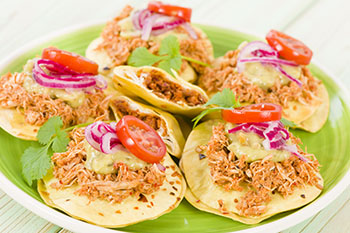
A vacation is an escape from the routine and a great opportunity to try new things. You’re visiting a whole other country with an ancient and rich culinary history. Traditional Mexican cuisine was added to the Representative List of the Intangible Cultural Heritage of Humanity by UNESCO in 2010, so try something new at every meal, and as we say here, “Buen provecho!” (Enjoy your meal!)
1.Sopa de Lima
A very tasty kind of chicken soup with a twist! It is based on a light chicken broth and served with shredded chicken, deep-fried tortilla chips, and what in the Yucatan Peninsula is known as lima. Not to be confused with limes or lemons, the limes a less acidic citrus fruit similar to lime but sweeter like an orange. Intriguing? Wait till you try it!
2.Panuchos
Small, handmade corn tortillas, stuffed with beans and then fried in oil or lard. They are served with shredded lettuce, some meat such as chicken, turkey or pork, tomato, and onion, previously seasoned with sour orange and salt. You should also try them with avocado, carrot, and colorado (a paste of pipian, chile, and achiote, also known as annato seeds). The panucho is said to have originated in Merida by a street vendor out of his typical ingredients but wanting to serve his hungry customers. That, however, is a story for another post.
3.Salbutes
Corn flour tortillas, deep fried in oil until they inflate and get crispy. They can be served with ground beef, chicken, or shredded turkey and are seasoned with tomato and lettuce, avocado slices, and chopped red onion. Ask for some refried black beans as a side dish. In fact, ask for panuchos and salbutes so that you can savor the flavor of both of these staples of Yucatecan cuisine.
4.Papadzules
These delicacies consist of corn tortillas soaked in a sauce made with pumpkin seeds, stuffed with eggs, and then bathed in a sauce of tomato with some habanero chili and onion. They are often garnished with chopped red onion and habanero chili, as well. Be careful with the habanero, it can be quite hot! Remember, if you’re not out for a spicy adventure, make sure to tell the vendor: sin picante, por favor! (Hold the spicy, please!)
5. Cochinita Pibil
A real feast for your senses, this dish is basically pork meat marinated in achiote, wrapped in a banana leaf, and cooked in an earth oven. According to some recipes from the early 1900’s, the entire pork (after some preparations, mind you) was baked in the earth oven. The cochinita pibil is accompanied with red onion in a sauce made with sour orange juice and habanero. It is usually eaten in tortas (a kind of sandwich) and tacos. This dish is also made with chicken; the famous Pollo Pibil. However you eat it and whatever meat you choose, Cochinita Pibil is definitely pulled pork paradise!

6. Kibis
Of course, we cannot forget the picturesque kibis. You can find people walking around the beaches with a glass box perched on their heads and shouting their singsong proclamation of “kibis… kibis!” Kibis are made with mashed wheat and ground beef or pork and seasoned with some spearmint, garlic, and onion. They are oval or round in shape and deeply fried. You should always eat them with some chopped red onions and, if you dare, habanero chili. These delicious darlings of Yucatan cuisine were actually brought to the region at the beginning of the 19th century by Lebanese immigrants. Today, they are a staple of the culinary heritage of the Yucatan Peninsula.
Don´t miss the chance to delve into Yucatan food and travel to the Riviera Maya check our Travel deals and BOOK NOW your beach getaway!
Source:
Yucatan Cuisine: Yet Another Reason to Visit the Mexican Caribbean

From Caribbean beaches to Pacific cruise ports, destinations in Mexico offer optimal inexpensive getaways. Cabo San Lucas, Puerto Vallarta, Puerto Peñasco (Rocky Point) and The Riviera Maya are just three vacation hotspots that won't wreck your wallet. Don't let pricey airline tickets ruin your vacation budget. With a few simple tips, save money you can spend instead on tours, souvenirs and enjoying Mexican culture.
Use the calendar
Use Southwest Airlines Low Fare Calendar online to view the cheapest times to fly to Cancun, Puerto Vallarta, Mexico City or Los Cabos. Enter your origination and destination cities and click on the month that you wish to travel. A calendar pops up showing the best deals for each day of the month. For example, airfare the day after Christmas and the weekend before Christmas is the most expensive time to travel during the month of December on a flight from Phoenix to Cancun. A flight costs less than half as much during the first 12 days of the month or after the first week of January.
Avoid Holiday Travel Times
Visiting Mexico during national holidays can be a festive and exciting experience, but you'll also pay a premium for airfare. Travel during times when school is in session and government and businesses offices are open to find the lowest rates. Mexican citizens tend to travel during the national holidays when many businesses close for one or more days. Airfare increases to Mexico for the Christmas holiday season beginning with December 12, the Day of the Virgin of Guadalupe. Although the main focus of the festival is Villa de Guadalupe Hidalgo north of Mexico City, the national holiday gives citizens time to travel in all parts of the country. The winter holiday season ends with the New Year's holiday. The Easter season is another busy travel season in Mexico where Maundy Thursday and Good Friday just before the Easter weekend are national holidays. Other national holidays include:
Constitution Day, the first Monday in February
Benito Juarez's Birthday, the third Monday in March
Labour Day, May 1
Independence Day, September 16
Revolution Day, the third Monday of November
Price flights online
If you know when you want to go on your Mexican holiday, check out onsite price matching sites like JustFly or Google Flights. Although you might have to move quickly to snag the very best deal, take time to check out the details before you commit. Some prices you'll find online don't include taxes and additional fees, which can tack on more than $100 on a flight from Phoenix to Cancun, for example. Lower priced fares might add one or more stops, extending your flight time. For example, a 4.5-hour flight from Phoenix can turn into 15 hours of flying and airport layovers when you fly via Dallas to save a few dollars. Keep legroom in mind, too. Google Flights includes how much legroom you'll have which, if you're tall, can be worth paying more for to be comfortable for hours in the air.
With SQN Getaways, find the best accommodation packages and have an amazing time in paradise.
Source: (Usa today)